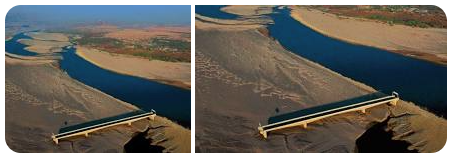
In 1998 Honduras opened a bridge designed specifically to withstand hurricanes. That same year the hurricane came. The bridge survived intact and lost its river.
Seriously.
The New Choluteca Bridge (Puente Sol Naciente), over the Choluteca river in southern Honduras, built between 1996 and 1998 by the Japanese firm Hazama Ando, engineered expressly for the region’s hurricanes.
In October 1998 came Mitch, one of the deadliest Atlantic hurricanes on record: days of torrential rain, thousands dead in Honduras, most of the country’s bridges destroyed or damaged.
Not this one. The structure did not flinch. But the water wiped out the access roads at both ends and, the final touch: the river carved itself a new channel and started flowing NEXT TO the bridge instead of under it.
Result: a perfect, expensive bridge standing on dry land, with no road and no water. “The bridge to nowhere” as a concept. Years later it got new access roads and went back into service.
Management and design people use it constantly as a metaphor: solving the wrong problem perfectly. The requirement said “survive the hurricane” and nobody asked what the river would do. Robustness is not adaptability.